Free Bird - Love versus Freedom
Aug 02, 2026I often play classic rock music in the late morning, before I head to the gym, while stretching on the floor. The music is shuffled in from Spotify on my powerful, six-speaker Sonos sound system. Stretching reduces gym risk. The rock and roll ignites my engines.
A couple days ago, Free Bird came on. It stopped me; I almost choked.
I got up off the floor, went to my computer, printed out the lyrics, and played the song again.
Free Bird, Lynyrd Skynyrd, 1973
If I leave here tomorrow
Would you still remember me?
For I must be traveling on, now
'Cause there's too many places I've got to see
But if I stay here with you, girl
Things just couldn't be the same
'Cause I'm as free as a bird now
And this bird you cannot change
Oh-oh-oh-oh-oh
And the bird you cannot change
And this bird you cannot change
Lord knows I can't change
Bye-bye, baby, it's been a sweet love, yeah-yeah
Though this feeling I can't change
But, please, don't take it so badly
'Cause Lord knows I'm to blame
….
I do this a lot – hear a song, print the lyrics, analyze it.
Probably because of the way I was feeling at the time, this one, on this day, hit home.
It’s interesting how songs can affect us. Today, I hear a song, and it’s meaningless. Tomorrow, I hear the same song, and it brings an ache, or a high.
Music has a way of pulling our emotions up to the surface.
The Free Bird song
On the surface, it’s a breakup song, a love song.
She wants permanence. But he can’t promise that.
If he stays, he’ll resent himself.
Underneath, it’s about something much deeper.
The tension between love and freedom, commitment and identity.
It isn’t really a song about leaving a woman. It’s a song about a man who knows he needs to go – to seek, search, explore, travel, expand, grow.
He needs to become who he is. Staying would require him to become someone he isn’t.
The Lynyrd Skynyrd band
Free Bird was recorded by Lynyrd Skynyrd in 1973. The band reached the height of their fame in the 1970s with their unique Southern rock genre.
The band’s name came in part as a mocking tribute to their physical education teacher, Leonard Skinner, at Robert E. Lee High School in Jacksonville, Florida. Skinner was known for enforcing the school’s policy against boys having long hair.
Ronnie Van Zant co-wrote the song and was the lead singer. He was a 25-year-old kid when it was recorded. His voice is inseparable from the song.
This is a recorded live version of Free Bird from July 2, 1977: Lynyrd Skynyrd – Freebird | Live at Oakland Coliseum Stadium (1977)
Here’s the memorable album cover from their fifth studio album, Street Survivors:
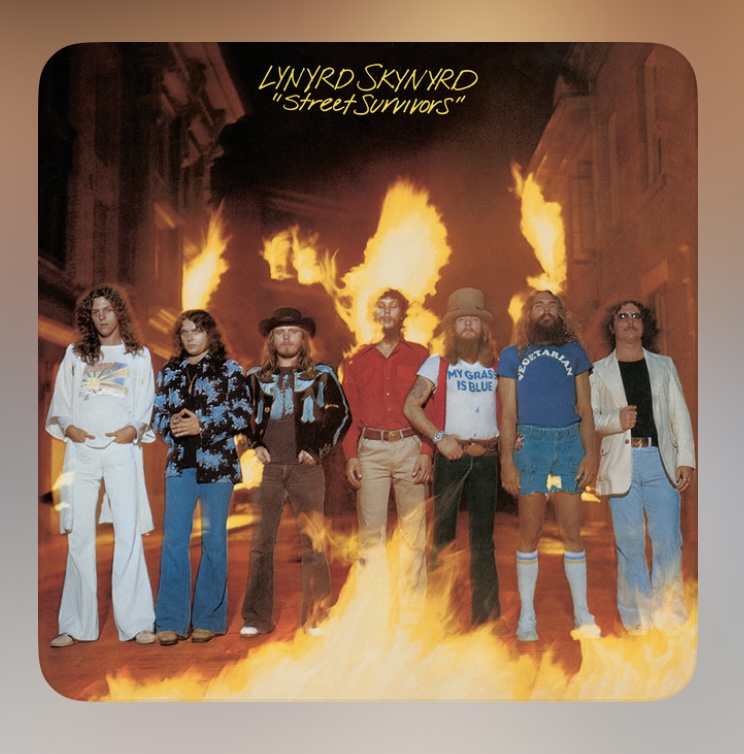
The album was released on October 17, 1977. Three days later, Ronnie Van Zant and bandmates Steve Gaines and Cassie Gaines were killed in a plane crash. The rest of the band were seriously injured. Ronnie was 29 years old.
Free Bird lyrics analysis
Typically, when I print lyrics, I end up with more questions than answers:
- Why “must” he be traveling on?
- What “places” will he see?
- Why “Things just couldn’t be the same?”
- Why is he free as a bird “now?”
- Why can he not “change?”
- Why might she “take it so badly?”
“For I must be traveling on, now”
He never says he wants to leave. He says he must.
He isn’t running from her. He’s being pulled by something inside himself.
He cannot stop becoming who he is.
Some men are wired this way. They’re explorers, wanderers, builders, adventurers, seekers.
Home feels wonderful, until it begins to feel like confinement.
It’s not a character flaw. It’s the way God made man.
“Cause there's too many places I've got to see”
Like what places? Life, experiences, possibilities, dimensions, dreams.
When we are young, the horizon feels almost infinite.
He’s choosing possibility over certainty.
“Things just couldn't be the same”
She deserves someone who truly wants to stay.
The relationship changes the moment he realizes he cannot give her what she wants.
Knowledge changes everything.
Once you’ve discovered the truth about yourself, you can’t unknow it.
Once he realizes “I am not built for this life,” there is no going back.
Even if he stays physically, emotionally he’ll be already gone.
“Cause I'm as free as a bird now”
Why now? Maybe he has finally admitted who he is, has stopped pretending, has become emotionally honest, has chosen authenticity over security.
He’s no longer willing to betray himself.
He’s honoring the vibrations from his soul, that ache we feel when we know it’s time to go, to move on, to get out of Dodge.
“And this bird you cannot change”
He doesn’t say “I won’t change.” He says “you cannot change” me.
That shifts the responsibility away from her.
She isn’t doing anything wrong. She’s simply asking something impossible.
"Lord knows I can’t change”
Not won’t. Can’t.
He’s saying, “I wish I could become the man you deserve, but I can’t.
That’s tragic. Not selfish.
“But, please, don’t take it so badly”
Rejection hurts, especially when love isn’t the problem.
Imagine hearing, “I love you…but I have to leave.”
That’s harder than “I don’t love you.”
She will naturally wonder, “what did I do wrong?”
His answer is “nothing; this isn’t about you. It’s about me.”
The song is about identity
One might interpret this song as a simple love song.
Or as a heroic anthem, emboldening men.
But it’s more than that. It says, “I can’t stop being me.”
There’s sadness. He isn’t celebrating. He’s apologizing.
Freedom has a price. He pays it. She pays it. Nobody wins.
Why Free Bird resonates with many men
Many men spend decades wrestling with two competing ideas.
One says: build a home – The other says: keep exploring.
One says: commit – The other says: don’t lose yourself.
One says: stay – The other says: there’s still more life out there.
Some men ignore the second voice and spend years wondering who they might have become. Others follow the second voice and wonder about the life they left behind. Very few escape the tension entirely.
Soaring Guitar Finale
The live performances became legendary because of the ending.
This is when the fans go nuts. You can see that in the live version above.
The climatic, soaring, extended finale featuring three lead guitars was epic.
When I hear those guitars, I don’t hear technical virtuosity.
I hear release, expression, expansion, explosion.
In the live version above, the lyrics spend six minutes wrestling with an impossible emotional dilemma. But the words become inadequate. The guitars takeover because human language has reached its limit. For another six minutes, the guitars say what human voice cannot.
It's almost as if the end of the song says, “I've told you why I must leave. Now let me show you what freedom feels like with these guitars.”
The guitars don't merely decorate the song. They complete the argument.
Ronnie explains freedom with words. The guitars embody freedom.
In many ways, the emotional destination of the song is reached not through the lyrics, but through that unforgettable instrumental finale.
The lyrics tell us about the conflict between love and freedom. The guitar finale lets us experience the exhilaration, loneliness, momentum, and release of choosing freedom.
Conclusion
The definition of freedom changes as our perception of time changes.
When we are young, freedom often means keeping every possibility alive.
As we age, freedom begins to mean something different.
It becomes the freedom to choose what matters most.
Most men eventually confront the same question: Is the greater tragedy losing the woman you love, or a place, or identity – or losing the person you were meant to become?
A free bird isn’t just choosing where to fly. He’s also choosing every identity he will never return to.
This is why Free Bird still moves people more than fifty years later. It's not simply about a man leaving a woman. It's about becoming someone new, knowing that each new chapter requires saying goodbye to an old one. And no matter how necessary those goodbyes are, they still carry a measure of sadness.
Thankfully, as many of us have learned, every goodbye brings new, fresh hellos – a new place, a new identity, a new love. One door closes, another one opens.
Be free, birds.
Thank you for reading.
Peter
Sign up for my newsletter here
Author