Losing Jenny - Buddhism's Four Noble Truths
Mar 30, 2026Ao Nang Beach, Krabi, Thailand
Outline
- Losing Jenny
- Buddhism's "birth, aging, sickness, and death"
- Buddhism's Four Noble Truths
- Buddhism's Eightfold Path
Losing Jenny
This past week was one of my most painful ever.
The receptionist at my condo building was killed in a motorbike accident five days ago. She was 26 and has a four-year-old daughter.
Jenny took care of my condo when I was traveling, helped with all the workers coming and going, and delivered packages to my condo. I grew close to her. She loved showing me pictures of her little girl. I tipped her well and she appreciated it probably beyond what you could imagine.
She was such a responsible young woman with a strong, determined, work ethic. I wonder where that came from – her mother, father, someone else, or some supernatural force. Conscientious, reliable, punctual; you could see the warmth in her eyes – humble, simple, happy; no meds, no therapy.
Every time I walked past her reception counter, she would smile at me, like she did to everyone else. I come and go many times a day, so that’s a lot of Jenny smiles per day. From the swimming pool, I could see her sitting at her desk diligently working.
Though our communication was slow (she spoke only a little English, I speak only a little Thai), we still managed to smoothly converse thanks to our language translation apps on our phones.
It’s striking how fast we can become connected to someone. Jenny became part of my daily routine since the day I moved into my beach condo here in Krabi, Thailand in December.
The day after Jenny passed away, she was laid to rest in an Islamic funeral ceremony.
Death is complicated. You’d think at 66 I have figured it out. Afterall, I’ve already lost a brother and both parents. The body responds in weird ways when we lose loved ones – fatigue, anxiety, trembling, aches.
Losing people close to use is a vivid reminder of our own mortality, that our time is limited.
Buddhism’s “birth, aging, sickness, and death”
On several occasions recently, I heard the same thing from Thai friends and my Thai doctor. Buddhism reminds us life is about “birth, aging, sickness, and death.”
One of the foundational ideas of Buddhism is “dukkha,” the unavoidable discomfort of being alive. “Du” means “bad” and “kha” means “axle hole,” implying a “bumpy ride.” Suffering, impermanence, and friction are part of living. It’s what we endure to live life.
Dukkha reminds us that these are not problems to solve but they are conditions of existence.
In the West, we tend to hide aging, fight death, medicate as if decline is optional and can be fixed. “This shouldn’t be happening to me.” We fight it.
Every symptom is a crisis, every condition is a battle, and every outcome is win or lose. We often react with denial, anger, or quiet despair as we face aging, health issues, and declining energy.
During their last decade of life, I spent a lot of time with Mom and Dad in Phoenix. What always struck me was their calendar, sitting on the kitchen counter, filled with so many doctor appointments. These were usually scheduled to get something “checked out,” most of which turned out to be nothing, only to be replaced with something new to be checked out.
In Buddhist culture, there’s a quiet acceptance that “this is normal, it’s supposed to happen this way.” Accepting that “birth, aging, sickness, and death” are normal can be liberating.
Buddhism reminds us we are not in control of everything; your body is temporary; your life is fragile. It’s a reminder to wake up, to live well now knowing that time is limited.
Buddhists believe suffering comes from fighting the reality of decline. Pain is inevitable, suffering is optional. They frame it as something that happens naturally and culminates with the question, how do I respond skillfully? It’s a powerful shift.
If we stop fighting reality, we will suffer less.
Aging is normal – resenting it is suffering.
Sickness is normal – fearing it and mentally fighting it is suffering.
Death is normal – denying it or obsessing over it is suffering.
We can resist these or we can accept them as conditions of life.
Buddhism’s Four Noble Truths: (Wikipedia)
The truths are statements of how things are when viewed correctly.
- Life includes suffering (dukkha).
- Suffering comes from attachment and craving.
- Suffering ceases when craving ceases (Nirvana).
- The Eightfold Path is the way to reduce suffering.
Buddhism’s Eightfold Path: (Wikipedia)
If suffering is part of life, how do we live in a way that minimizes unnecessary suffering?
- Right View – knowing that life includes suffering, nothing is permanent.
- Right Intention – focus your mind the right way – less greed, less ill will, less ego.
- Right Speech – don’t lie, don’t gossip, don’t speak harshly.
- Right Action – don’t harm others, act with integrity, even when no one’s watching.
- Right Livelihood – earn a living without harming or poisoning others.
- Right Effort – train into a good life, reduce negative mental habits, build positive ones.
- Right Mindfulness – manage your thoughts, emotions, body; notice the sensations.
- Right Concentration – focus your mind; a scattered mind creates a scattered life.
All of this makes me think about Dr. Atul Gawande’s bestselling book, Being Mortal. He is a Harvard-trained practicing surgeon. His book reveals the struggles of his profession and shows the goal is not a good death but a good life. It’s a great book as you contemplate end of life decisions for loved ones or yourself.
Conclusion
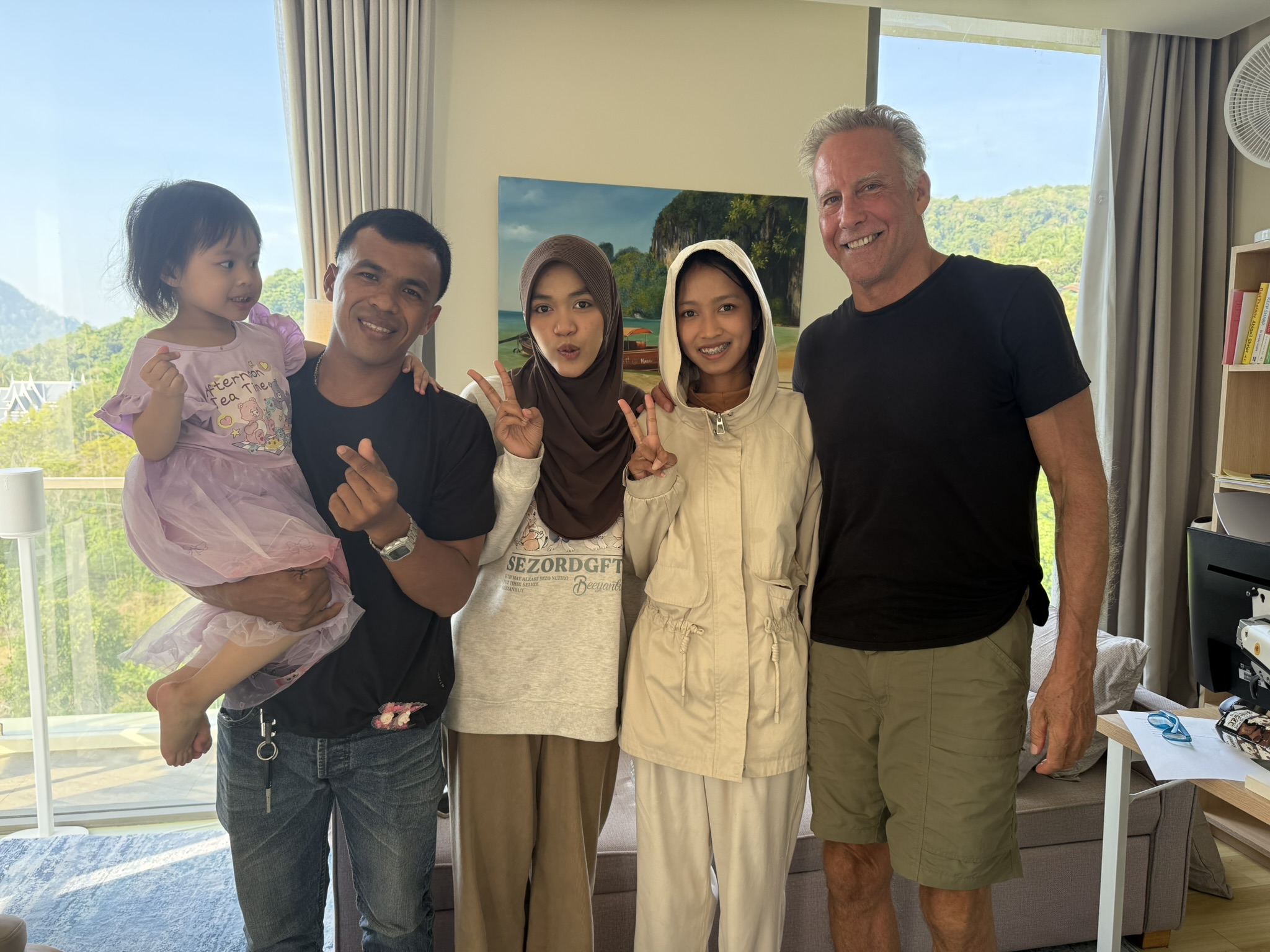
Yesterday, Jenny’s husband, daughter, and friends sat with me in my condo overlooking the Andaman Sea. Together, we mourned the loss of Jenny. At the end, Jenny’s husband stood up and gave me a huge hug. Man hug. I had the feeling that I just did something good, mourning Jenny with her loved ones.
After they left, I cried alone in my condo. Not only because we lost Jenny, but because life has taught me, again, we can find love anytime, anywhere, no matter what our age. Find love. It’s out there.
Please stay safe, wear your helmet, fasten your seatbelt. Life is fragile.
Every day is a gift. What we do with that gift is who we become.
This one is for you, dear Jenny.
Rest in peace. We love you. We will miss you. ️
Love,
Peter
Jenny’s husband, daughter, friends, and me in my condo yesterday.
Sign up for my newsletter here
Author