The Killing Fields - The Resilience of Hope
Nov 08, 2026Greetings from Thailand!
I just returned from 10 days in Cambodia.
It was wonderful having my daughter with me.
1975 – Morgan Hill, California
As a kid in high school in California, I would read my dad’s daily San Jose Mercury News.
It’s 1975. I’m 15 years old.
Pol Pot’s Khmer Rouge captures Phnom Penh, the capital of Cambodia. Thirteen days later Saigon falls to the North Vietnamese, marking the end of the Vietnam War.
Looking back, it seemed like the Vietnam War and Pol Pot always dominated the headlines.
Over the years 1975-1979, Pol Pot’s regime systematically murdered around 2 million of its own people through executions, torture, starvation, disease, and forced labor. That was over 20% of Cambodia’s population.
Most of the Khmer Rouge's atrocities became widely understood only after the regime fell in 1979. During the years of its rule, Cambodia was largely closed to outsiders, although refugees and journalists were already reporting horrific conditions.
The Khmer Rouge engaged in deliberate destruction of intellectual and cultural life. Teachers, doctors, scholars, actors, monks, government officials, and other educated people were killed.
Why?
A teacher represents the transmission of knowledge.
A physician represents the preservation of life.
A scientist represents the pursuit of truth.
A Buddhist monk represents a spiritual and cultural tradition.
The Khmer Rouge treated these people as threats.
The regime wanted to create an entirely new society, starting at what it called Year Zero.
One of the most unsettling things about this history is that Pol Pot himself was educated. He studied in Paris and became involved in radical communist politics there.
Cambodia lost far more than a generation of human beings. It lost knowledge, institutions, traditions, and countless opportunities for human progress.
Visit to the Killing Fields
This week in Cambodia, I visited Choeung Ek Genocidal Center and Tuol Sleng Genocide Museum, and the Killing Fields Genocide Museum in Siem Reap.
There is something deeply affecting about visiting places where humanity has committed its greatest atrocities. You can read about them in history books, watch documentaries, and study the politics that made them possible.
But standing on the ground where thousands of innocent people were systematically tortured and killed is something altogether different.
Walking through the Killing Fields of Cambodia was a chilling, sobering, and emotional experience. There are places in this world where the weight of history feels almost unbearable.
These are places where the darkest capabilities of human nature have been exposed, where cruelty triumphed over compassion, and where innocent lives were extinguished in the service of a deranged political ideology.
I experienced something similar almost exactly forty years ago when I visited the Dachau Concentration Camp outside Munich, Germany.
Standing in Cambodia brought those memories rushing back. It’s unimaginable to contemplate the deliberate destruction of the country's intellectual and cultural life.
Teachers, doctors, scientists, scholars, and spiritual leaders—people whose knowledge and wisdom might have helped build a better Cambodia—were systematically killed.
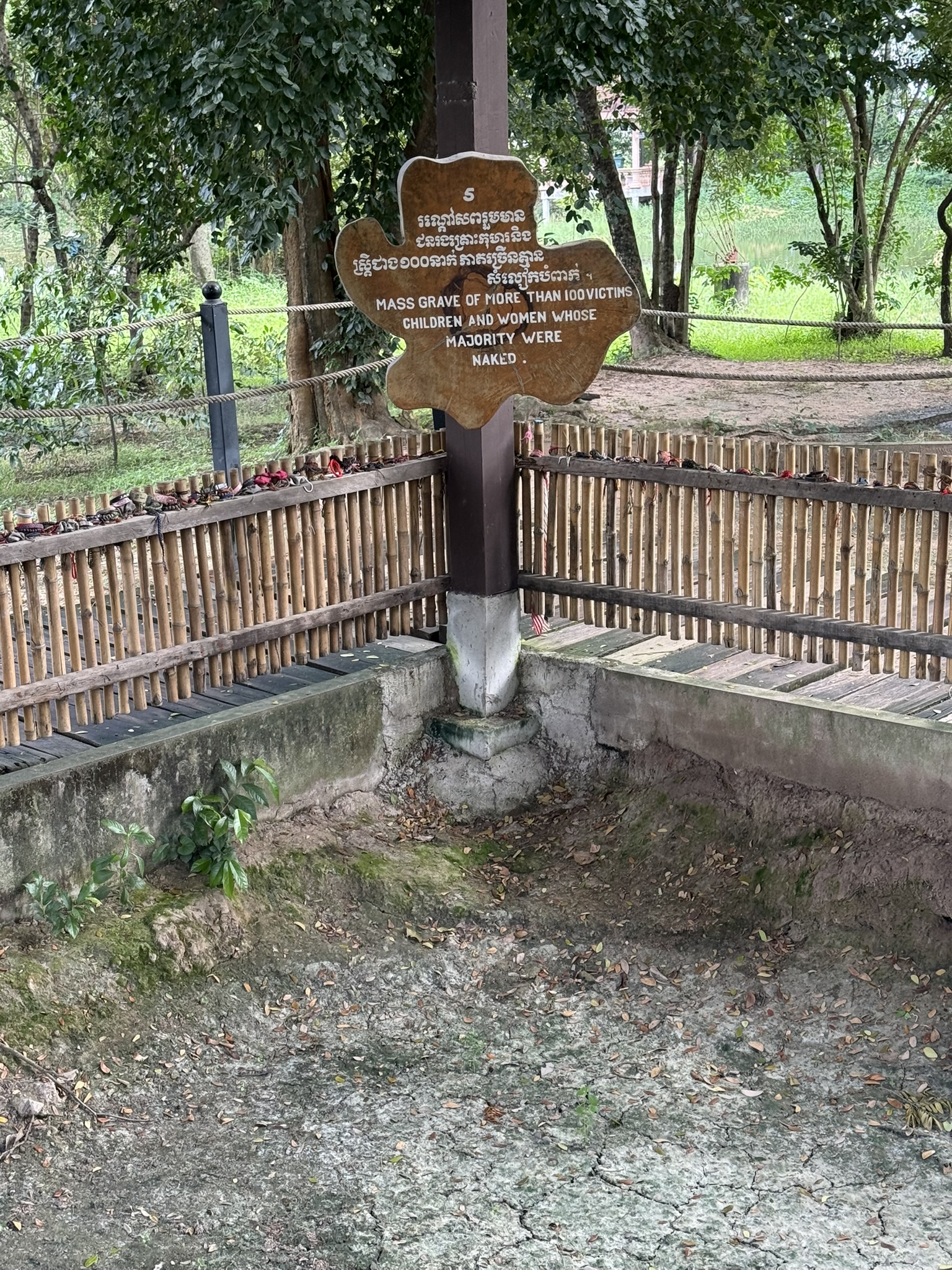
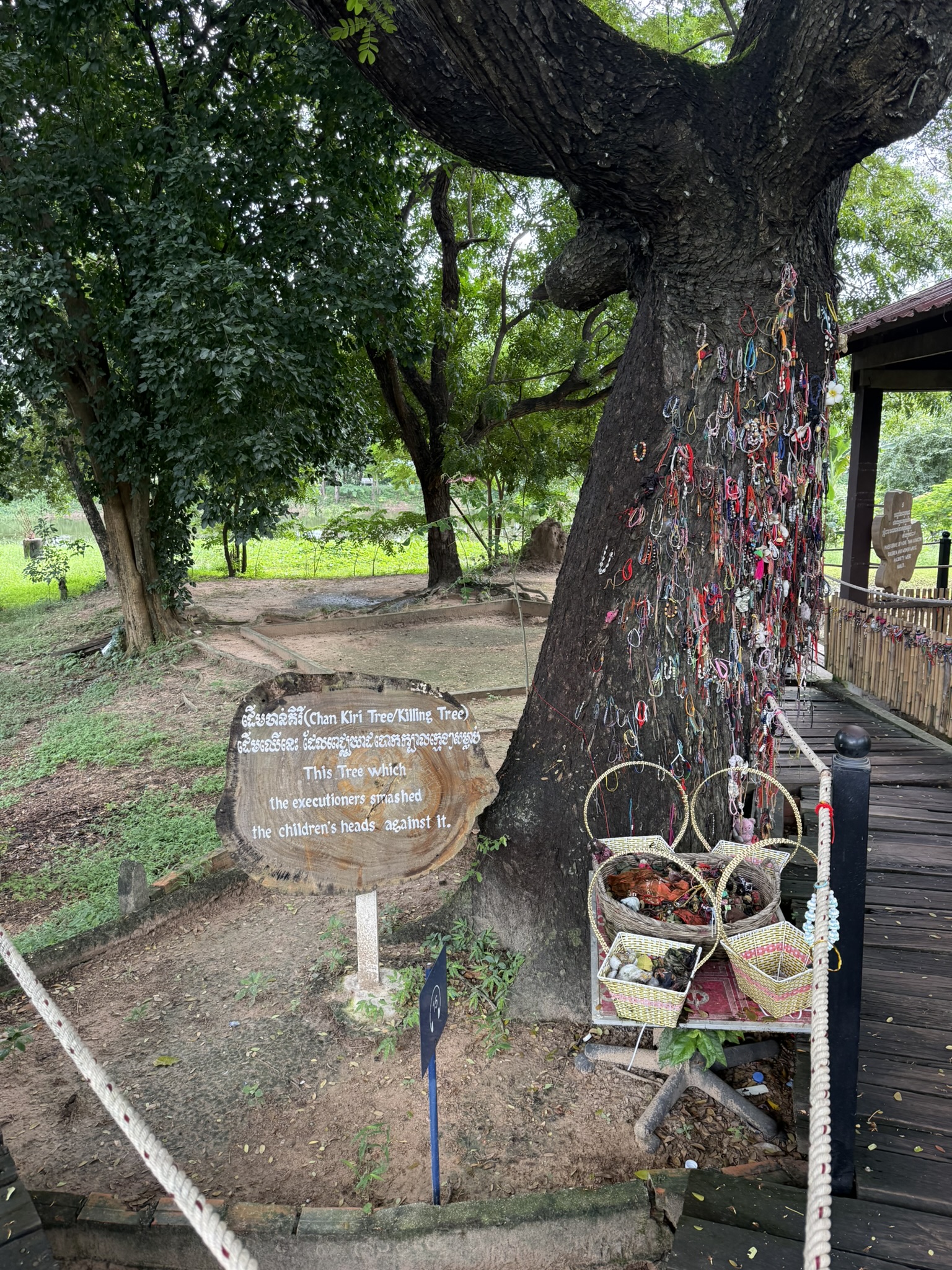
Here are two pictures I took at Choeung Ek. The verbatim words from the two signs are:
“Mass grave of more than 100 victims – children and women whose majority were naked”
“This tree which the executioners smashed the children’s heads against it”
Emotions
What I saw goes beyond sadness. It’s horror, grief, moral outrage, disbelief, helplessness, and profound disillusionment with human nature.
Standing in a place where innocent people suffered unimaginable cruelty, and you know there is absolutely nothing you can do to change what happened. That is an emotionally difficult position for a compassionate human being.
I found myself asking the same question I had asked at Dachau four decades earlier: How can human beings do this to one another? How can an entire society become captive to the madness of a few men?
I think it’s complicated and rooted in fear, self-preservation, dehumanization, ideological certainty, conformity, obedience, and gradual moral compromise.
I left feeling a profound sadness, not only for the lives that were lost, but for the lives that might have been lived, the knowledge that might have been shared, and the generations that might have benefited from their wisdom.
What happens when ordinary people surrender their capacity for independent moral judgement to an authority that claims to know what is right? That question is as relevant today as it was in 1975.
It's frightening that entire societies can become vulnerable to evil when fear, ideology, resentment, obedience, and desire for belonging overwhelm independent thought and moral judgment.
Hope for a better future
Perhaps the most touching part of my visit to Cambodia was not something I experienced at the museums or memorials. It was the people I met. Here are two:
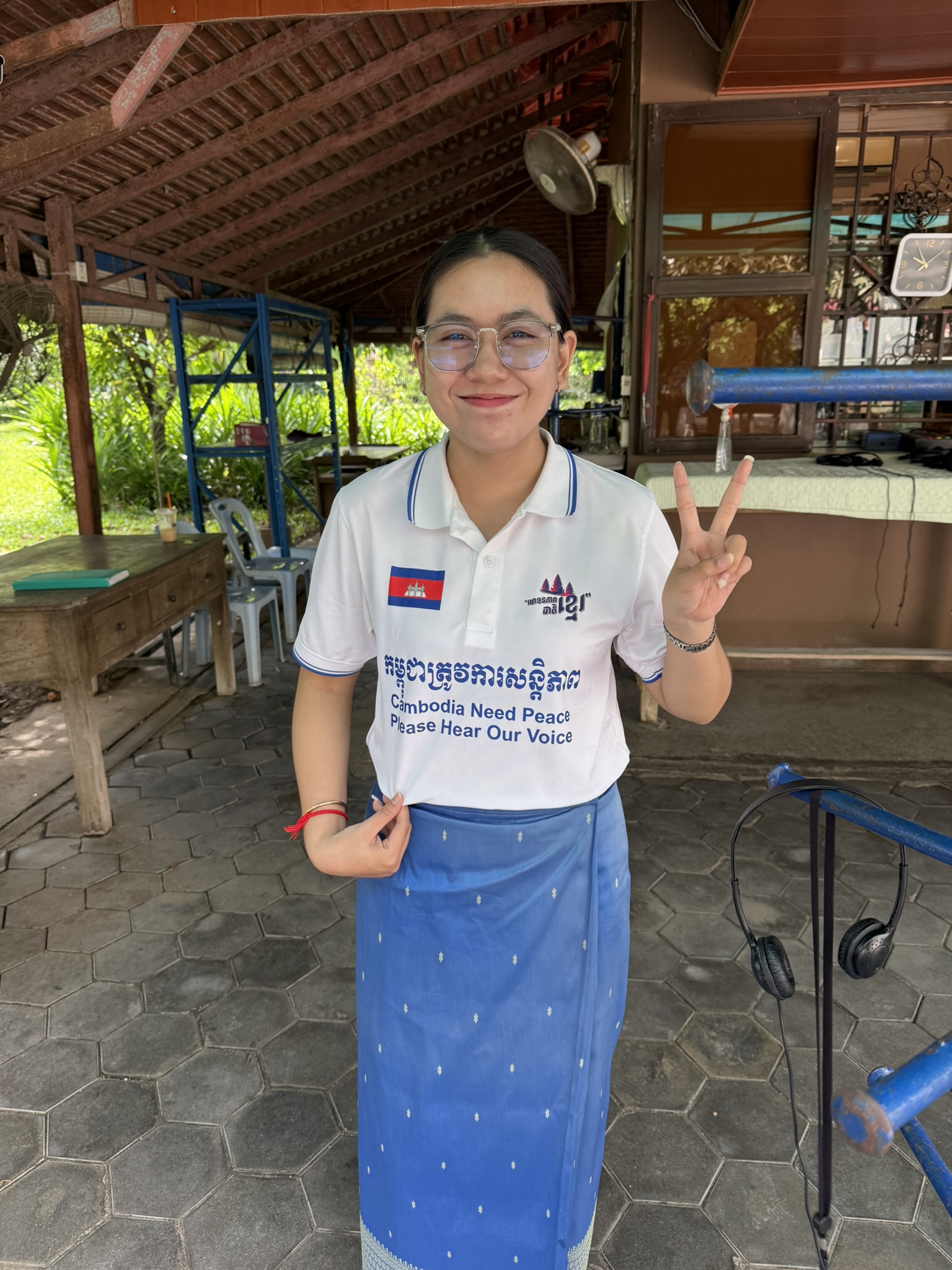
The Cambodian girl
As I walked through the Choeung Ek Genocidal Center, I noticed that several young Cambodian women working there wore shirts bearing a simple message:
"Cambodia needs peace. Please hear our voice."
I saw those same words displayed elsewhere during my visit. They stayed with me.
Here I was, standing on ground where thousands of innocent people had been murdered, reading a message from a younger generation asking the world for peace.
I couldn't help interpreting those words as a plea for compassion. A request that we listen, that we remember, and that we recognize our shared humanity.
There was something profoundly moving about encountering that message in a place associated with such unimaginable cruelty.
Perhaps the most important thing we can do when visiting places like Choeung Ek is not simply to learn what happened, but to listen to the people who are living with its legacy.
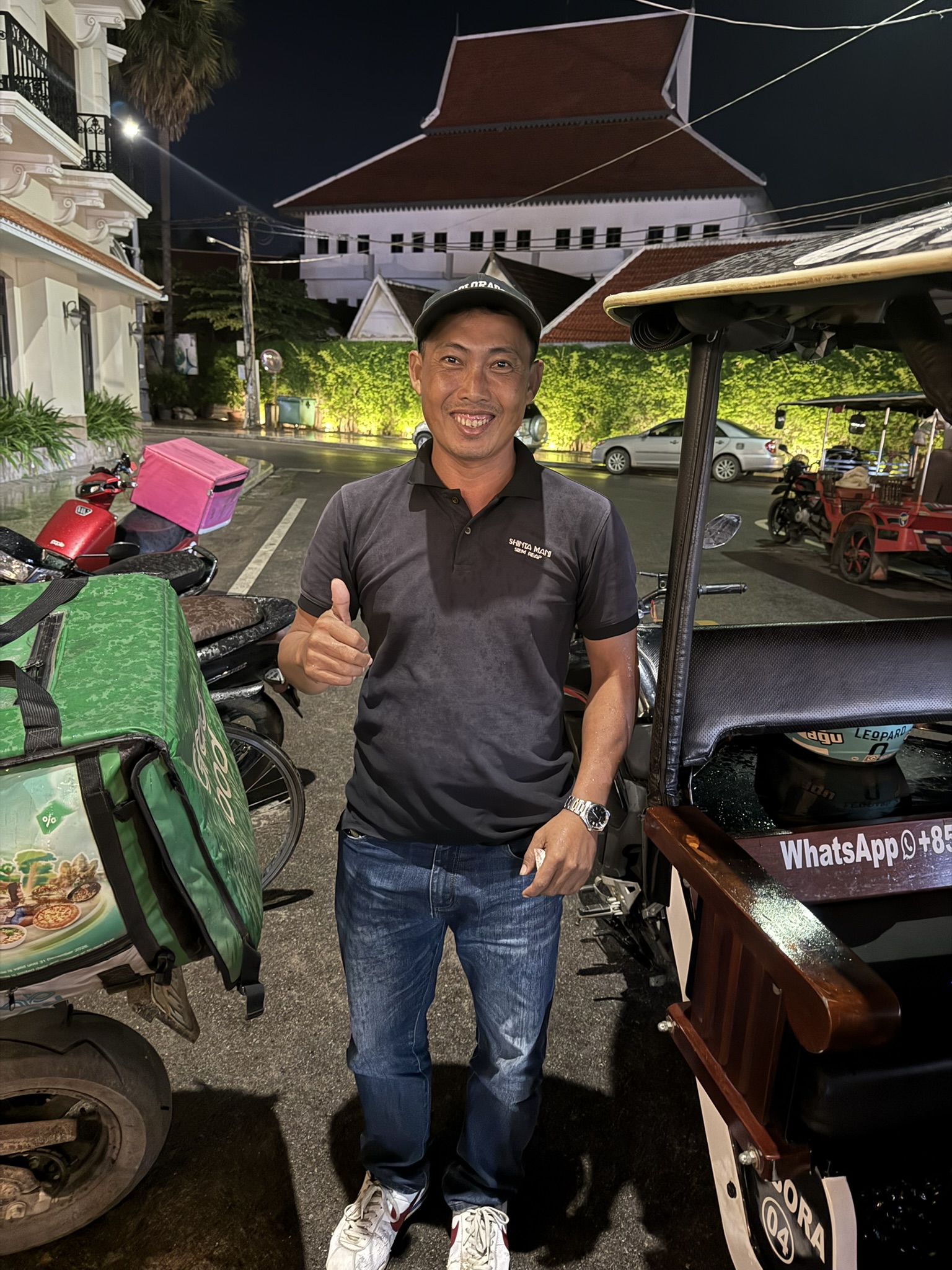
Tuk Tuk drivers
When we took a car or Tuk Tuk, it seems every driver said:
"Thank you for visiting Cambodia."
Rather than encountering bitterness or resentment, the Cambodian people repeatedly thanked us for coming to Cambodia. Against the backdrop of the country's history, those words carry extraordinary emotional weight.
Here were people living in a country that had endured unbelievable suffering, expressing gratitude simply because we had chosen to visit.
Several spoke hopefully about Cambodia's future, their ambitions, and desire to see their country continue rebuilding from the devastation of its past.
Human beings possess an extraordinary capacity for destruction. But they also possess an extraordinary capacity for resilience, compassion, and renewal. Often, it is those who suffer most who develop the greatest resilience and have great purpose.
I hope one day I can be a small part of helping Cambodia continue rebuilding.
Here are two pictures - one of the girl wearing the shirt and one of my Tuk Tuk drivers:
Conclusion
The day after I returned from Cambodia, I found myself listening to a song by the rock band Boston, To Be a Man (1986). Here are the last lines:
“To look through the hate and see”
“I know that’s what a man can be”
What does it really mean to be a man? What does it mean to be strong?
Perhaps genuine strength lies not in our capacity to dominate others, but in our willingness to resist hatred, question authority, and recognize the humanity of people whose beliefs, cultures, and circumstances differ from our own.
It takes little courage to follow a crowd. Sometimes it takes extraordinary courage to stand apart from one.
And perhaps that is one of the most important lessons we can teach the next generation.
I was fortunate to share my visit to Cambodia with my 24-year-old daughter. We were first in Thailand together, and now she’s continuing her journey in Japan.
At one point during our travels, I told her something I feel strongly about:
"I wish every young person could travel like you are doing now."
I wish more young people had the opportunity to experience different countries, encounter unfamiliar cultures, and develop friendships with people whose lives are very different from their own.
There is an education that takes place through travel that cannot be replicated in a classroom.
You begin to understand that the world is much larger and more complicated than where you were raised.
You discover we all share the same fundamental hopes – to be safe, to love, to be loved, and to have opportunities.
It is a lot harder to hate people we have come to know.
Perhaps a young person who has walked through the Killing Fields of Cambodia, spoken with its people, and learned about their hopes and struggles will be a little less susceptible to the rhetoric of hatred and division.
Perhaps that young person will be more willing to question authority, resist prejudice, and think independently.
“Cambodia needs peace. Please hear our voice.”
We hear you, Cambodia.
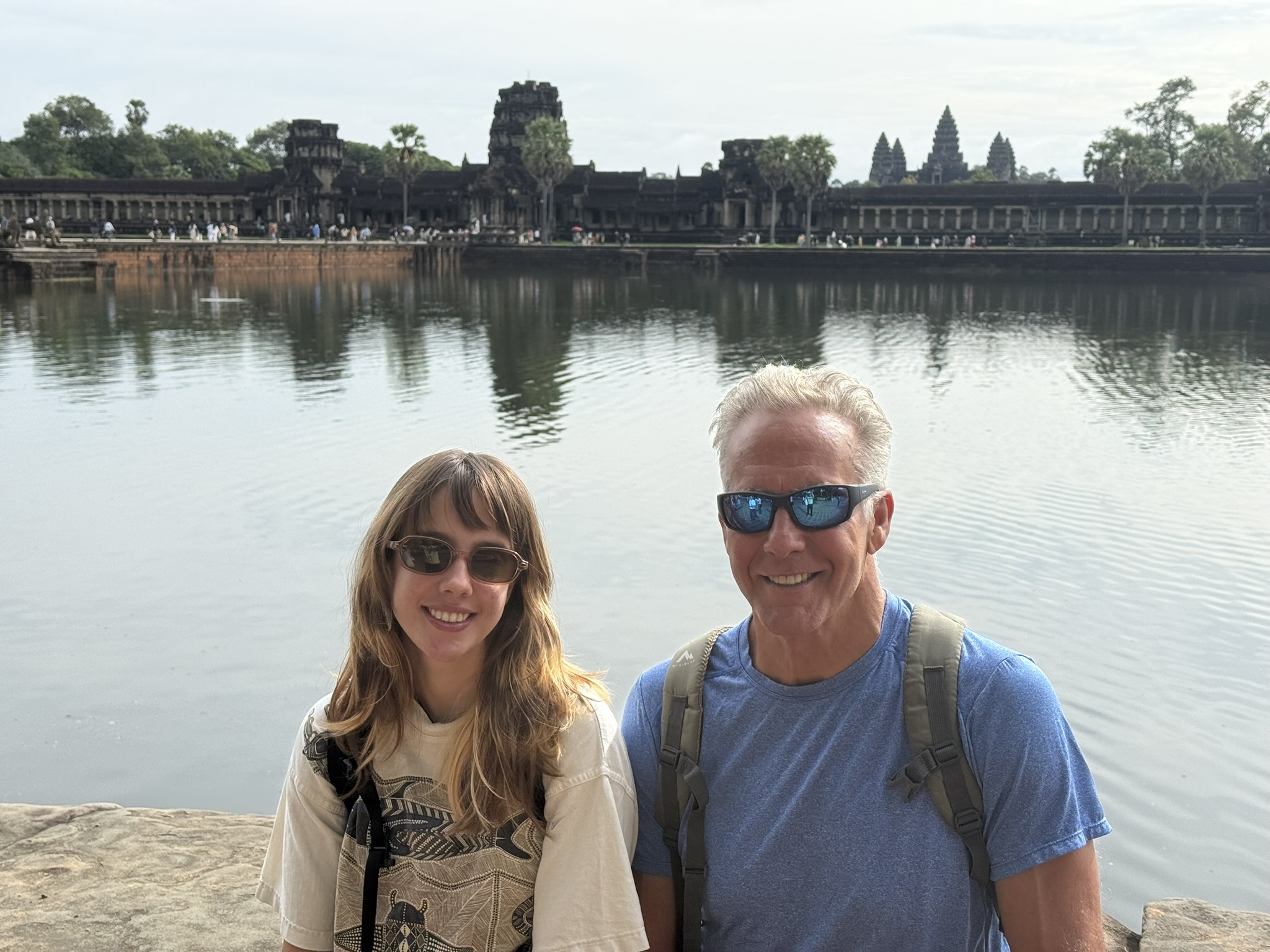
Here is my favorite picture. It's my daughter and me sitting outside Angkor Wat in Siem Reap:
Movies:
Two great movies for anyone interested in understanding Cambodia's tragic history:
- The Killing Fields (1984), which portrays the fall of Phnom Penh and the horrors of the Khmer Rouge through the experiences of two journalists.
- Angelina Jolie's First They Killed My Father (2017), which tells the story through the eyes of a young Cambodian girl who survived the genocide. It’s based on the book: First They Killed My Father (2006), by Loung Ung, a survivor of the Cambodian genocide.
Both are difficult to watch. But both offer a deeply human perspective on a tragedy that should never be forgotten.
Here are the links to their IMDb pages:
The Killing Fields (1984)
First They Killed My Father (2017)
Thank you for reading.
Peter
Sign up for my newsletter here
Author